



DOMESTIC DUCK
Ducks love water play and will splash in puddles just for the joy of it. They also sleep with one eye open—literally!
OVERVIEW

CONSERVATION STATUS
Not Evaluated
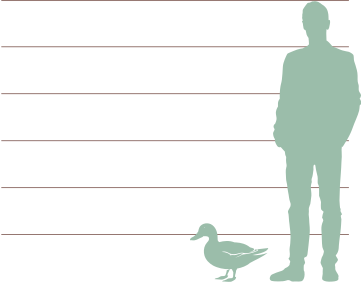
AVERAGE SIZE
Compared to a 6′ Man

AVERAGE WEIGHT
8.8 – 11 lbs

AVERAGE LIFESPAN
5 – 10 Years

DIET
Omnivore

REGIONS
Worldwide
LOCATION
Most domestic ducks descend from the mallard (anas platyrhynchos) and were first domesticated in southern China around 2000 BC.
Domestic ducks are primarily found on farms, in rural homesteads, or in urban/suburban park ponds, often as a result of abandonment. As flightless, domesticated animals, they generally stay near water sources, require secure, ground-level shelters at night for protection from predators, and are creatures of habit that do not wander far.
Domestic ducks (except for Muscovy) typically do not thrive in the wild and can face starvation, as they lack the instinct to migrate or the skills to fly away from danger.
APPEARANCE
Domestic ducks come in many shapes, sizes, and colors depending on the breed. The White Pekin is one of the most recognizable, with a large, rounded body, creamy white feathers, and bright orange feet and bill. Drakes (males) are often slightly larger and, in some breeds, more colorful than females. For example, some drakes may develop an iridescent green head or a distinctive curled tail feather.
Ducks are built for the water! Their feathers are coated with natural oils that keep them waterproof—allowing them to stay dry and buoyant even after a full day of swimming. Underneath the outer feathers is a soft, fluffy down layer that helps insulate their bodies in cooler temperatures. Their broad, flat feet are webbed (connected by skin), acting like paddles to help them steer and swim with ease. While ducks do have small nails at the tips of their toes, they’re not sharp or used for defense—instead, they help with gripping muddy or uneven surfaces as they waddle and forage.
A duck’s beak is another incredible tool. It’s not just for eating—it’s also equipped with sensitive nerve endings that help ducks explore their environment. Tiny comb-like structures inside the bill, called lamellae, allow ducks to filter food like seeds, insects, and small aquatic animals from mud or water. They use their beaks to preen and spread oil over their feathers, keeping them clean and waterproof.
CHARACTERISTICS
Domestic ducks are social, intelligent birds with strong foraging instincts. They thrive in mixed-flock environments and are known for their calm, gentle demeanor—especially compared to their wild Mallard ancestors. Most domestic breeds require access to clean water for preening, drinking, and maintaining feather health.
Male ducks are called drakes. Female ducks are simply called ducks. Baby ducks are called ducklings. A group of ducks on land is called a brace, while a group swimming is called a raft.
Female ducks typically lay one egg per day during their laying season, producing clutches of 8 to 15 eggs before beginning incubation. The incubation period lasts around 28 days, after which the ducklings hatch in close succession. However, many high-production breeds have been selected more for egg-laying capacity than maternal instincts and may not go broody, relying instead on artificial incubation or surrogate hens. Some breeds, like the Indian Runner, can lay over 300 eggs per year, making them one of the most prolific egg-layers among ducks.