



NORTH AMERICAN RIVER OTTER
River otters are exceptional swimmers. They can close their nostrils and ears to keep water out, helping them dive as far as 60 feet and hold their breath as long as eight minutes.
OVERVIEW

CONSERVATION STATUS
Least Concern
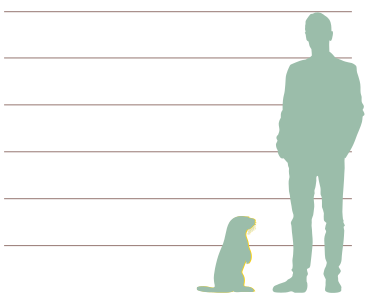
AVERAGE SIZE
Compared to a 6′ Man

AVERAGE WEIGHT
13 – 33 lbs

AVERAGE LIFESPAN
8 – 13 Years

DIET
Carnivore

REGIONS
North America
LOCATION
North American river otters are found throughout Canada, the United States, and parts of northern Mexico, wherever clean, reliable water sources are available. They prefer habitats such as rivers, lakes, marshes, and coastal wetlands, especially areas with plenty of vegetation, fallen logs, and natural cover along the shoreline.
Otters do not usually dig their own dens. Instead, they take over abandoned burrows made by other animals, such as beavers or muskrats, or use natural spaces under tree roots, hollow logs, or rock piles. These dens typically have an underwater entrance, which helps protect them from predators and provides easy access to the water.
During breeding season, females prepare a secure den to give birth and raise their pups. As the pups grow, the family may move to temporary resting areas, sometimes called “holt sites” or gathering spots, where the young otters stay while adults hunt. Outside of breeding, otters are highly active and may travel long distances along waterways, using multiple resting sites within their home range.
APPEARANCE
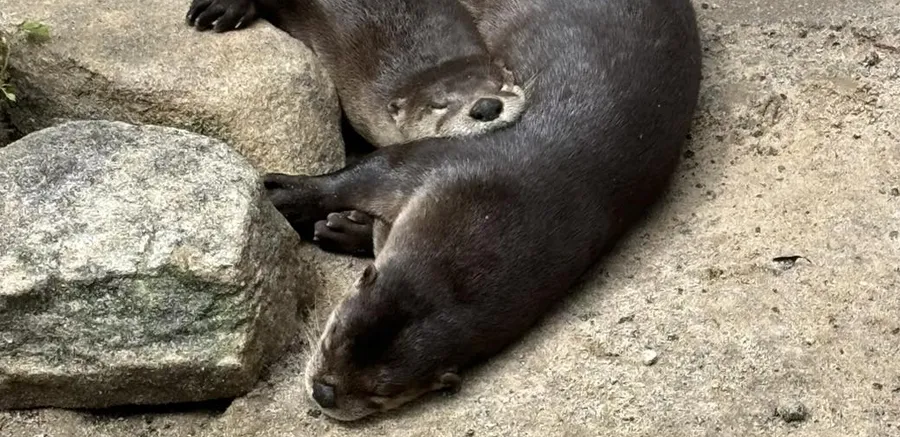
North American river otters have long, sleek, and streamlined bodies built for life in the water. Adults typically measure 3 to 5 feet (30–60 inches) in total length, including a long, tapered tail that makes up about one-third of their body length.
Although they appear low to the ground, river otters stand about 10 to 12 inches tall at the shoulder, giving them a compact but powerful profile. Their flexible spine allows them to move quickly and fluidly, both when swimming and when bounding across land.
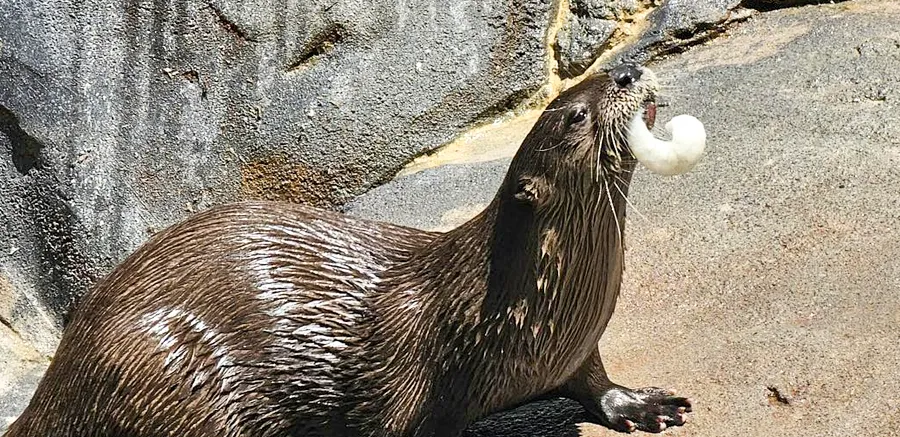
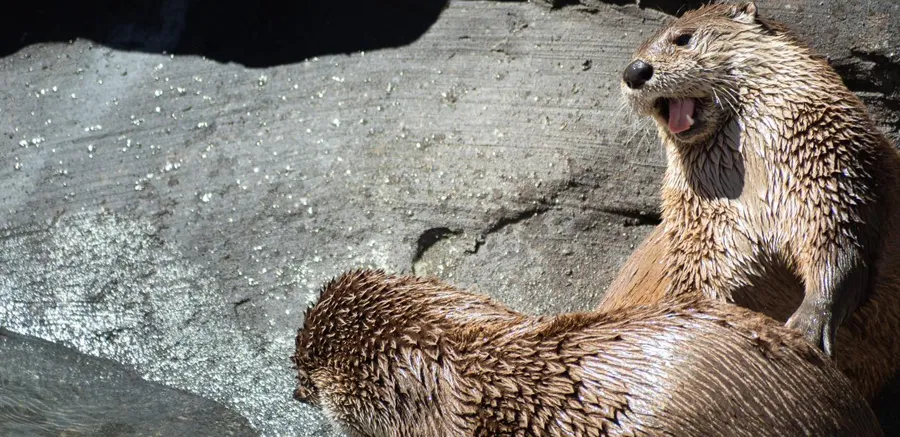
Their dense, water-repellent fur is one of their most important adaptations. A soft underfur traps air for insulation, while longer guard hairs help keep water away from the skin. This gives them a rich brown, glossy appearance, often lighter along the throat and chest.
River otters have short, strong legs and webbed feet, which act like paddles in the water. Their long, muscular tail helps propel and steer as they swim. Their heads are rounded with small ears and nostrils that close underwater, allowing them to dive with ease.
Highly sensitive whiskers (vibrissae) help detect movement and vibrations in the water, making it easier to locate prey even in murky conditions. Combined with strong jaws and sharp teeth, these features make river otters highly efficient aquatic hunters.
CHARACTERISTICS
North American river otters are intelligent, curious, and highly adaptable animals. While they are often described as semi-social, their behavior varies depending on age and season. Females typically stay with their young, forming small family groups, while males may travel alone or in loose groups with other males. They are most active at dawn and dusk and spend much of their time exploring, hunting, and traveling along waterways.
River otters maintain large home ranges rather than strict territories. These areas can span anywhere from 1 to 9 square miles (about 640 to 5,700 acres), with some individuals covering even larger distances depending on food availability and habitat. Instead of defending a fixed territory, they move throughout these ranges using multiple resting sites and dens, often returning to areas where food is plentiful.
Built for life in the water, otters are powerful and agile swimmers. They can dive for several minutes at a time and use their strong tails and webbed feet to twist, turn, and chase prey with impressive speed and precision. On land, they are surprisingly fast and often travel by bounding or sliding—especially on mud, grass, or snow.
Mothers raise their pups with great care, teaching them essential survival skills such as swimming, hunting, and navigating their environment. Young otters stay with their mother for up to a year before becoming independent.
River otters are perhaps best known for their playful behavior, but this activity serves an important purpose. Sliding, wrestling, and chasing help strengthen social bonds and develop the coordination needed for hunting. They also communicate using scent marking, vocalizations, and body language.
Otters have a few fun and surprising traits—they can hold their breath for up to 8 minutes, use their sensitive whiskers to detect prey in dark or murky water, and often return to favorite sliding spots again and again. Whether gliding through the water or playfully tumbling on land, river otters are one of the most energetic and engaging animals in their habitat.