



AMERICAN ALLIGATOR
Alligators can go through over 2,000 teeth in a lifetime, continuously replacing them as they wear down or break.
OVERVIEW

CONSERVATION STATUS
Least Concern
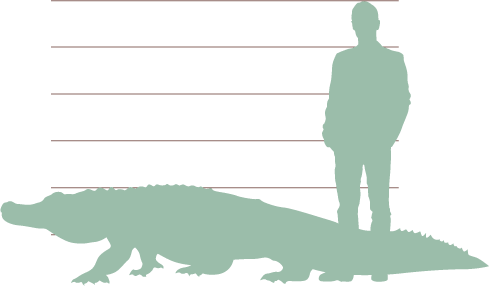
AVERAGE SIZE
Compared to a 6′ Man

AVERAGE WEIGHT
500 – 1,000 lbs

AVERAGE LIFESPAN
35 – 50 Years

DIET
Carnivore

REGIONS
North America
LOCATION
American alligators are found throughout the southeastern United States, primarily in freshwater environments such as swamps, marshes, rivers, lakes, and wetlands. They prefer slow-moving water with abundant vegetation, which provides both cover and access to prey. Occasionally, they may also be found in brackish water, though they are less tolerant of saltwater than some other crocodilian species.
Alligators do not use permanent dens in the same way many mammals do, but they may create “gator holes”—depressions dug into the mud along waterways. These holes retain water during dry periods and can serve as important refuges not only for the alligator but also for other wildlife. During colder months, alligators may dig burrows into banks where they can shelter and regulate their body temperature.
During breeding season in late spring and early summer, females build large nest mounds made of vegetation, mud, and debris, typically near the water’s edge. As the plant material decomposes, it generates heat that helps incubate the eggs. After laying, the female remains nearby to guard the nest until the eggs hatch.


APPEARANCE
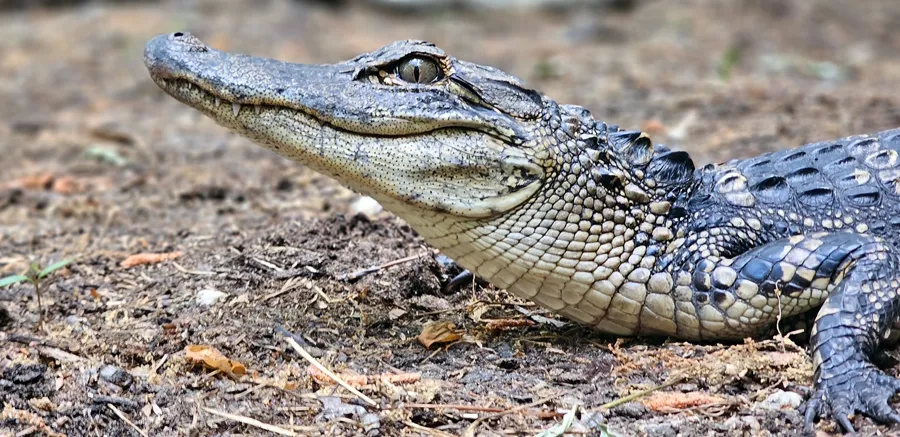
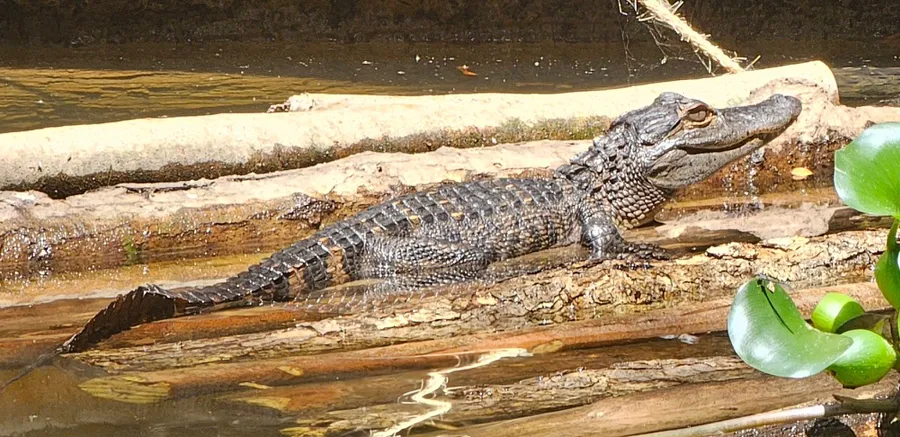
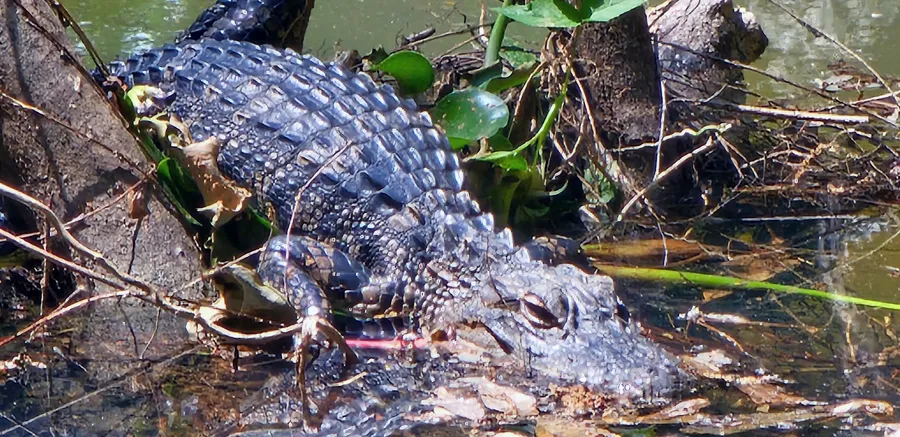
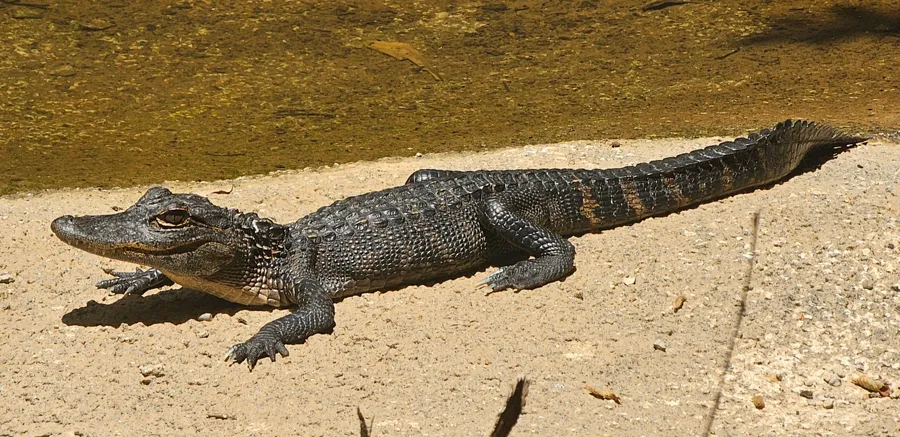
American alligators are large, powerful reptiles with broad, rounded snouts and heavily armored bodies. Adults typically range from 8 to 11 feet in length, though large males can exceed 13 feet. Despite their size, they have a relatively low profile, standing only about 12 to 18 inches tall at the back when walking, with shorter legs that keep their bodies close to the ground.
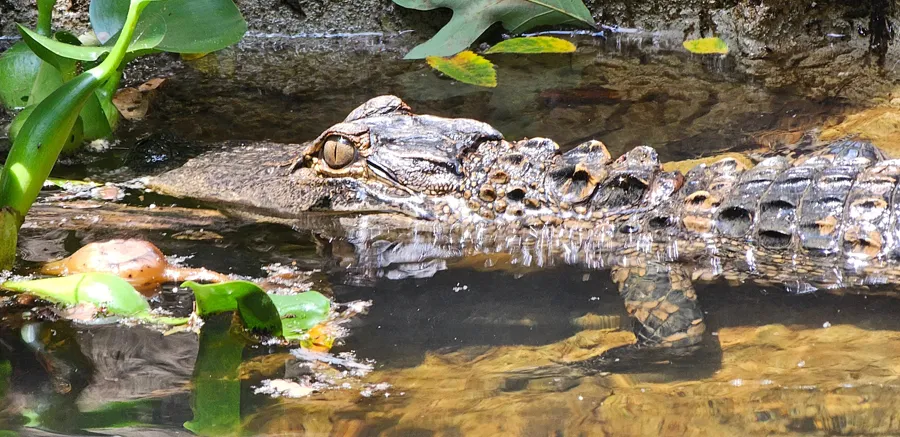
Their skin is covered in thick, bony plates called scutes, which provide protection and give them their rugged, textured appearance. Coloration is usually dark gray, black, or olive, helping them blend into murky water and shaded wetlands. Younger alligators often display lighter bands across their bodies and tails, which fade as they mature.
Alligators have strong tails that make up nearly half of their body length and are used for powerful propulsion in the water. Their eyes, ears, and nostrils are positioned on top of their heads, allowing them to remain mostly submerged while still seeing, hearing, and breathing. They also have a special transparent eyelid, called a nictitating membrane, that protects their eyes underwater.
CHARACTERISTICS
American alligators are solitary, territorial animals that spend much of their time quietly resting or slowly cruising through the water. They are most active during warmer months and tend to be less active in colder weather, sometimes entering a state similar to dormancy. As cold-blooded reptiles, they rely on external temperatures to regulate their body heat and are often seen basking in the sun.
They are opportunistic carnivores with a varied diet that changes as they grow. Young alligators feed on insects, small fish, and amphibians, while adults are capable of taking down larger prey such as fish, turtles, birds, and mammals. Their powerful jaws deliver one of the strongest bite forces in the animal kingdom, allowing them to grasp and subdue prey with ease.
During breeding season, males produce deep, resonating bellows that can be heard over long distances, often accompanied by visible vibrations in the surrounding water. Females are highly attentive mothers, guarding their nests and assisting hatchlings once they emerge. After hatching, young alligators may remain close to their mother for protection during their early months of life.
Despite their fearsome reputation, alligators play a vital role in their ecosystems. By creating gator holes and regulating prey populations, they help maintain the balance and health of wetland environments. They are also known to be surprisingly agile, capable of short bursts of speed on land and impressive stealth in the water.